We are excited to announce our fourth annual season!
The Santa Rosa Junior College Game Development Program is pleased to invite SRJC students, staff, faculty, and members of the public to our annual speaking series exploring perspectives on the creation of games.
Presentations monthly from March through May, 2026.
All talks online via Zoom
Zoom Meeting ID 698 266 936
|
“Becoming a Game Art Director & Character Artist”Alessandro Briglia, Art Director / Character Artist / Toymakerⓘ
I often describe myself as a salmon swimming upstream. I didn’t really choose art… It never was a choice, but a strong need. My family encouraged me to pursue a more practical path, so instead of attending an art high school, I enrolled in a technical institute and specialized in industrial chemistry. It wasn’t what I wanted, but looking back, it taught me discipline and problem-solving. While studying, I kept drawing. I copied comics obsessively and took small illustration jobs. I looked for mentors wherever I could find them. Eventually, I earned a scholarship and chose to study industrial design. Why? Because my dream was to do special effects and cinema. At the time, special effects were just practical, and artists like Stan Winston were my heroes. Industrial design allowed me to study both art and technology, and that combination became a foundation for everything that followed. Working as designer pushed me to find always practical simple solutions to adjust to production needs and was something fundamental for my future career. A close friend forced me to try something new, a 3D software, 3D Studio R4. I resisted, because I saw computers as cold machines, not creative tools. After one intense weekend experimenting with spheres and cubes, under the supervision of my friend, something changed, I became curious, then had fun. I started sending renders to industry magazines in Italy, receiving positive feedback and that was the moment I realized: video games were a real job! My first break came after I claimed in an interview that I could create 30 characters in one month. I absolutely could not, but I said foolishly yes anyway. I studied day and night until I was able to complete the task. That experience taught me one of the most important lessons of my career: never run from a challenge, embrace it. I later joined Milestone in Milan: by day, we worked on racing games, and by night, a small group of artists created short films purely for passion. We pushed each other. We gave brutally honest feedback and we improved together. Eventually, we all left Italy. I applied to a company in Bay Area, even though I didn’t speak English (I studied French): I landed a position at Factor 5 in and moved to the United States shortly after getting married. The beginning was hard: new language, new culture, new expectations. But growth rarely happens inside comfort. At Factor 5, I worked on Lair for PlayStation 3, modeling dragons and creatures under experienced art directors. The production involved long crunch periods, but it taught me humility and patience. At Shaba Games, I experienced what true team synergy looks like. Artists who had worked together for over a decade moved like a single machine. It was intimidating but inspiring. That’s where I fully embraced both concept art and 3D character development. Creating a character from scratch and then bringing it to life in 3D became one of my favorite processes. When I joined Toys for Bob, I initially thought the stylized direction wasn’t for me. I planned to stay for one year… I stayed ten. I worked on Skylanders from its early development, creating characters and later managing in-house toy prototyping through 3D printing. My industrial design background suddenly became essential for toys production: nothing you learn is wasted, skills often connect in unexpected ways. During that time, I stepped into leadership as a Character Team Lead. And I failed at first; being a strong artist does not automatically make you a strong leader. I had to learn management, and fast, so I ask HR help to enroll me in all possible classes. Following my interest to work on VR, I joined Penumbra, a company specializing in medical devices that want to use VR for rehabilitation of stroke patients, and my chemistry study came into use to medical methodology and production. Eventually, I became an Art Director, just as COVID forced teams into remote work. Leading 20+ artists without physical interaction was a completely new challenge. My role shifted: art direction is not about creating everything yourself but It’s about helping others create at their best. One of the most meaningful parts of this role has been mentoring young artists entering the industry for the first time. Helping them bridge the gap between school and production is something I deeply value: watching a team grow from the start of a project to the final delivery is one of the most rewarding experiences in my career. My journey was not linear. It moved from illustration to chemistry, from industrial design to 3D modeling, from artist to leadership.
|
|
“A Journey into Higher Education & Games After SRJC”Boston Freeman, SRJC Alumnus, Current USC Student ⓘ
|
|
“Communication through Game Design”Dr. Lex Pulos ⓘ
|
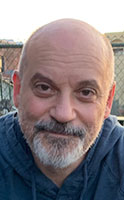 I didn’t grow up in the entertainment industry; I grew up in a family of fishermen in Italy. No one around me worked in art, games, or film, but from a very early age, I felt an undeniable urge to create. Drawing wasn’t a hobby, it was something I had to do.

 Boston is a game producer and marketing strategist with hands-on experience managing multidisciplinary teams and coordinating game development lifecycles. He has a strong background in coding, game development, narrative, QA testing and user experience.
 Learn all about the new SRJC course FMA 11: Communication through Game Design. Students will explore the historical, theoretical, and philosophical functions of games as cultural artifacts for meaning making. Students will examine a wide range of fundamental game principles related to non-digital games, such as aesthetics, iteration, playtesting, and group interaction. Additionally, students will critically analyze game mechanics, design, and gaming cultures.
Join the Game Dev Program mailing list